What Is The Issue?

What's so bad about the water?

One of the main issues plaguing indigenous communities is unsafe water. This water could be deemed unsafe for many reasons, but one of the more common ones is due to E.coli detected in the water system. E.coli has some pretty nasty symptoms, ranging from horrible diarrhea to vomiting. Unfortunately, not all issues are due to E.coli, and cannot be boiled out. These issues can be caused by chemical spills or other pollutants.


Government's "Solution"

What the hell is a BWA?!?!

In order to inform the public about issues in their area, DWAs (Drinking Water Advisory) were created. There are 3 levels to DWAs: Boil Water Advisory (a.k.a. BWA), Do Not Consume Advisory and Do Not Use Advisory. BWAs are the most common making up about 98% of all DWAs, thus also being the focus of this site.

BWAs can be broken down further into two types. These are short-term, or temporary boil water advisories. And also long-term advisories. Long-term advisories usually defined as a BWA which is has been in place of 12 months. Environmental Public Health Officers can advise the chief and council of a nation to lift an advisory, but can't force it to be lifted

Relationship Issues

The consequences of long-term advisories

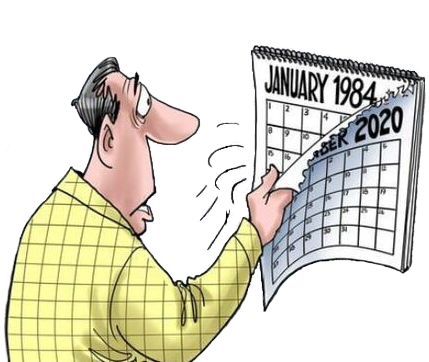
12 months is just the minimum for an advisory to considered "long-term". In reality, advisories can be in effect for many years. There have been many First Nations communities which have been under an advisory for a decade. This results in general mistrust in the government and in the advisory itself. Perhaps the government just forgot to lift it, or maybe the government just doesn't care enough to remove it.

1984

According to a CBC interview, the Neskantaga First Nation was "approached by private companies and charities offering to help with the water problems in his community". However, Chief Peter Moonias hesitates to take this companies up on their offer, stating that "We don't want to leave the government off the hook...when they have the obligation to do that". It seems as though First Nation communities don't want the government to get away with ignoring Indigenous problems.

Making Progress

What has the recent government done about this?

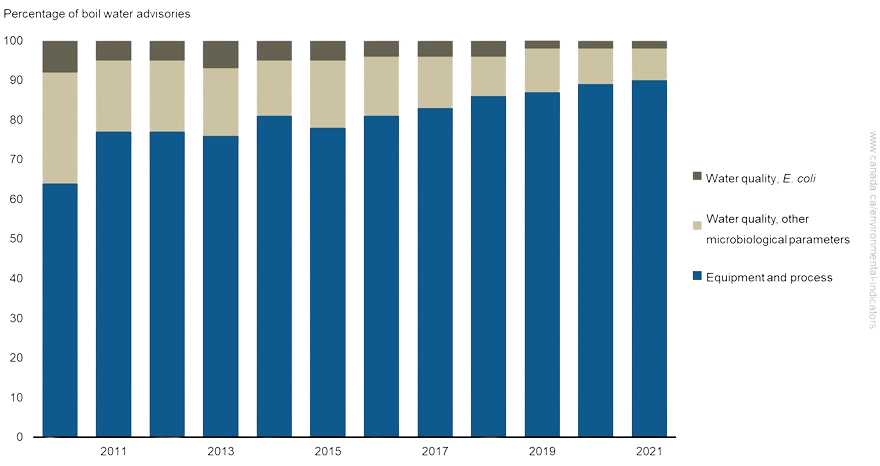
Before going on about what the government is doing, I must quickly state the main issues causing these advisories. This can be summarized in a single word: Funding. There is a severe lack of funding towards solving this issue. According to the Government of Canada, roughly 90% of advisories are caused due to equipment and process issues. This could be anything from a lack of training to poor maintenance, issues which can be easily solved given enough funding.

Chart of water advisory causes

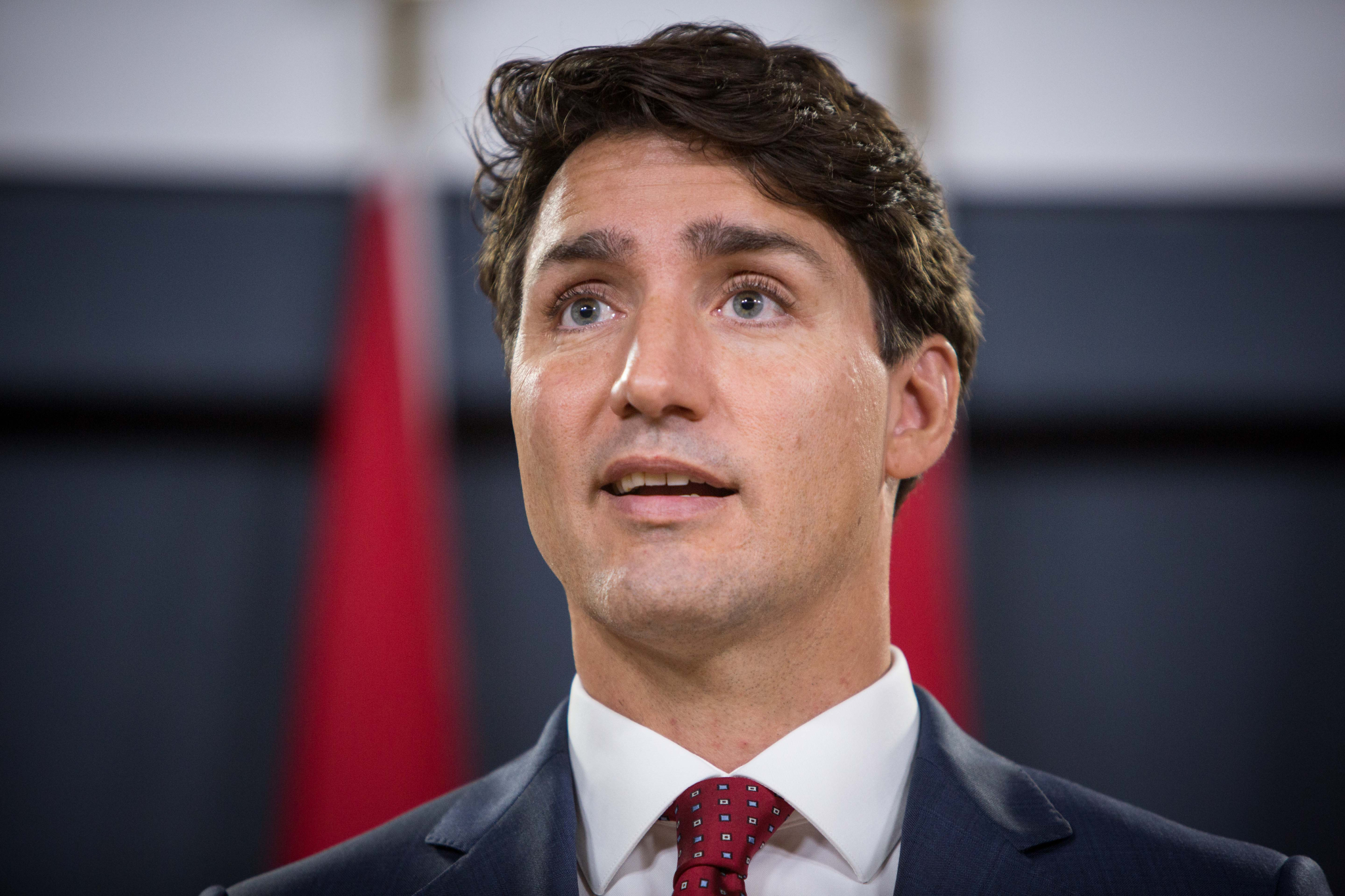
One of the marketing points for Trudeau was ending BWAs within 5 years. Obviously, that has not happened yet, but progress is being made. Every year, more advisories are being lifted than being placed (except for 2020). 83% of long-term advisories have been lifted, 10% have been solved but are pending chief approval, and another 5% are under construction. Obviously this still isn't a solved issue, but compared to previous governments, this is better than what we could have asked for.